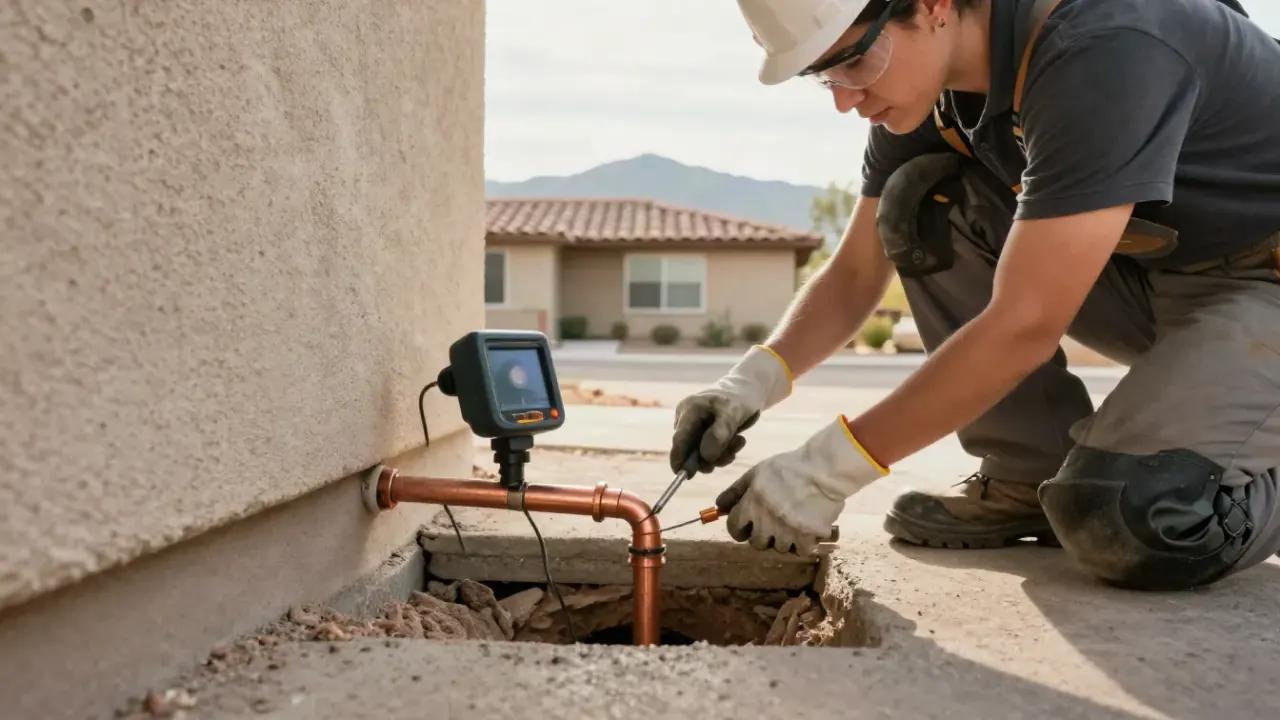
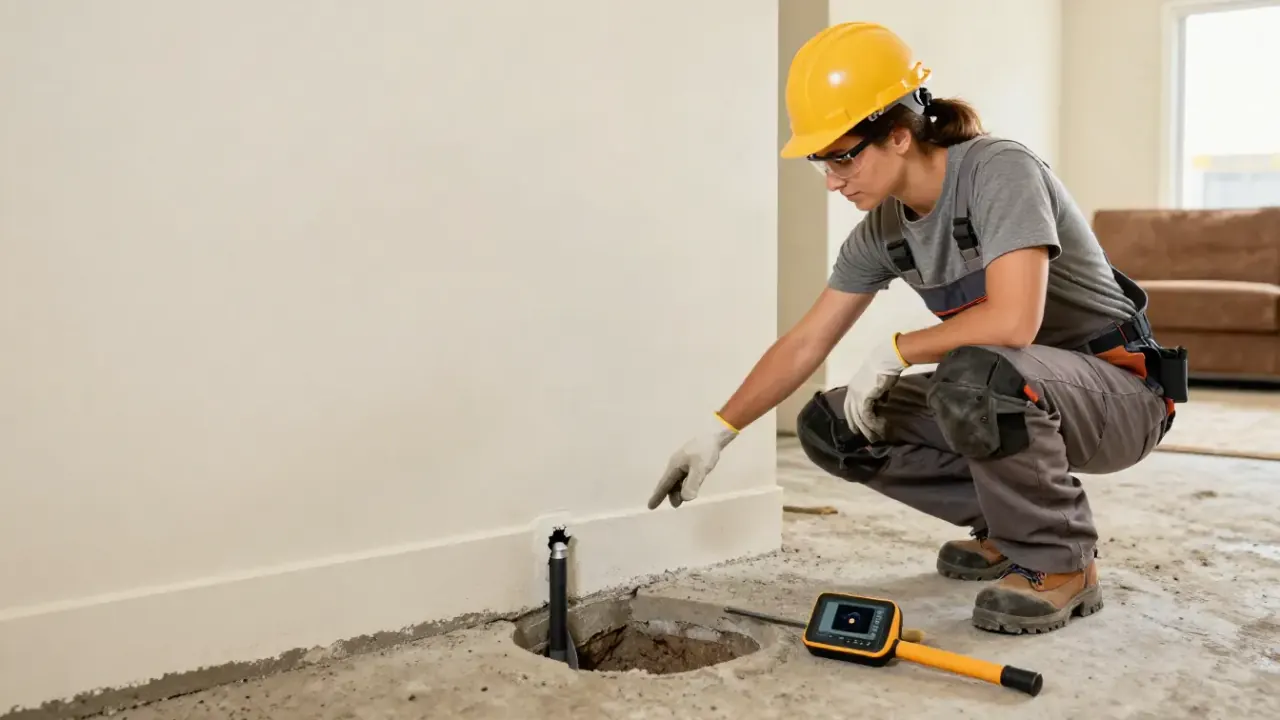
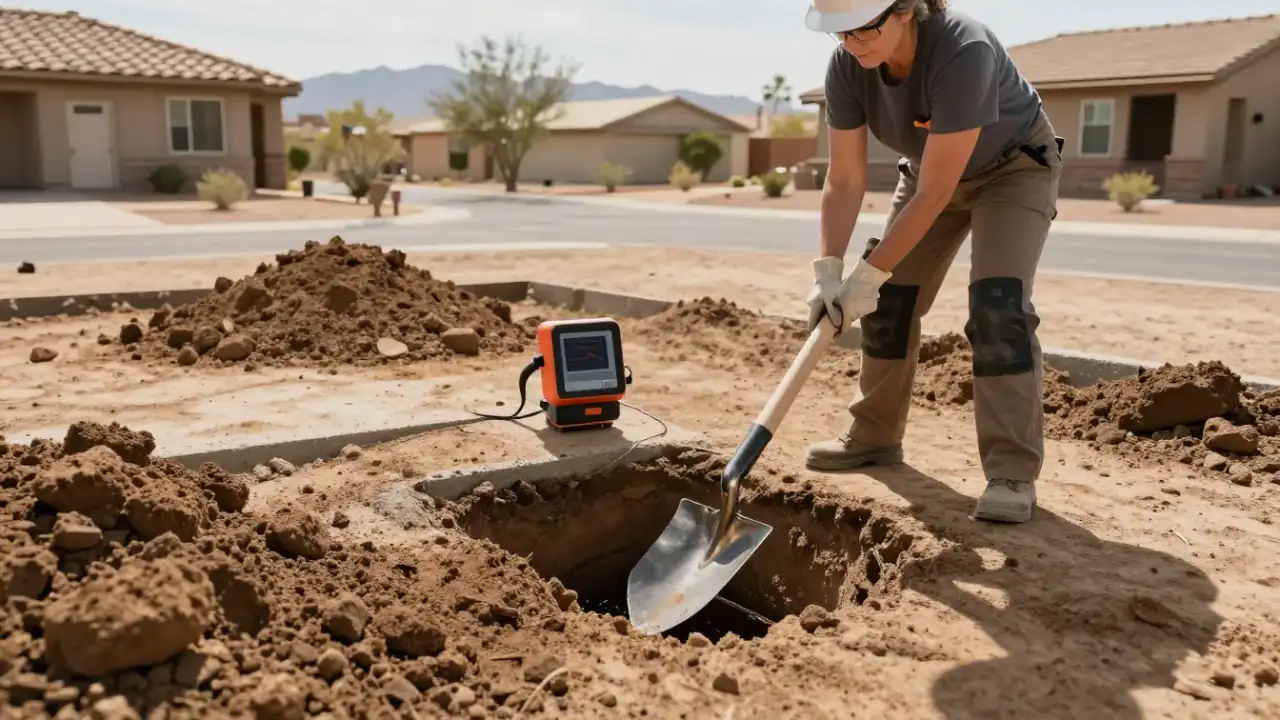
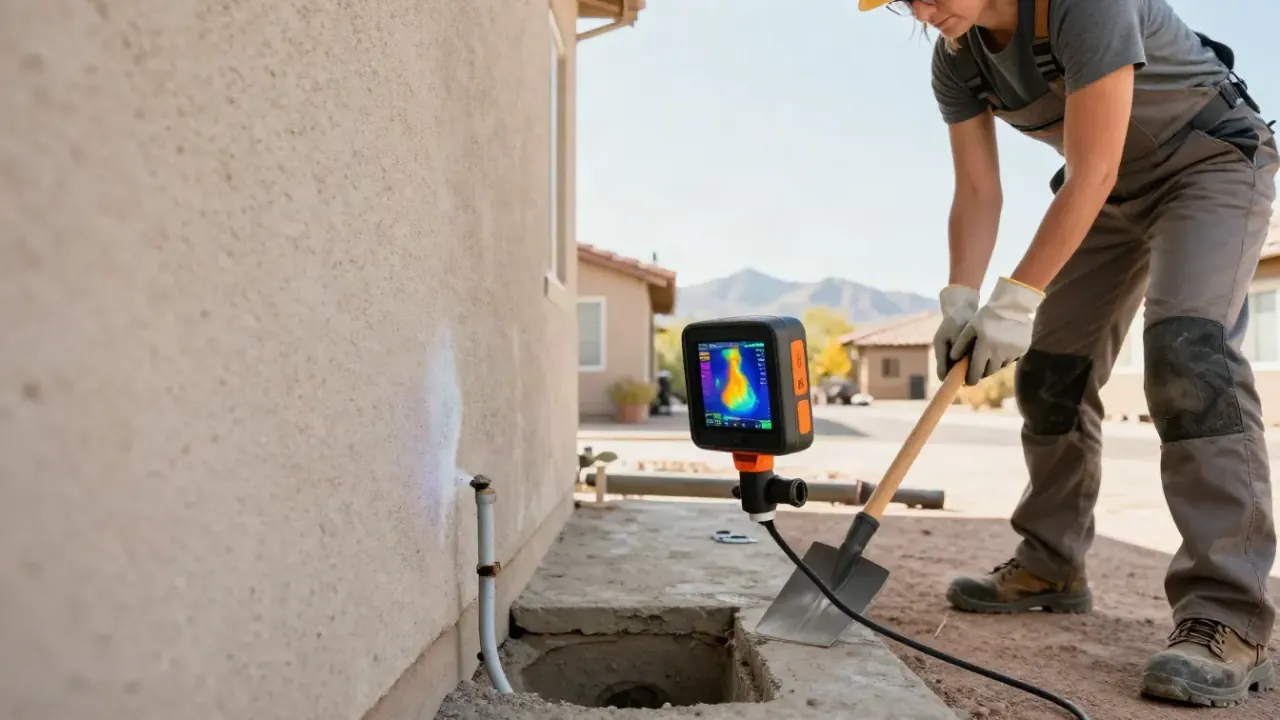
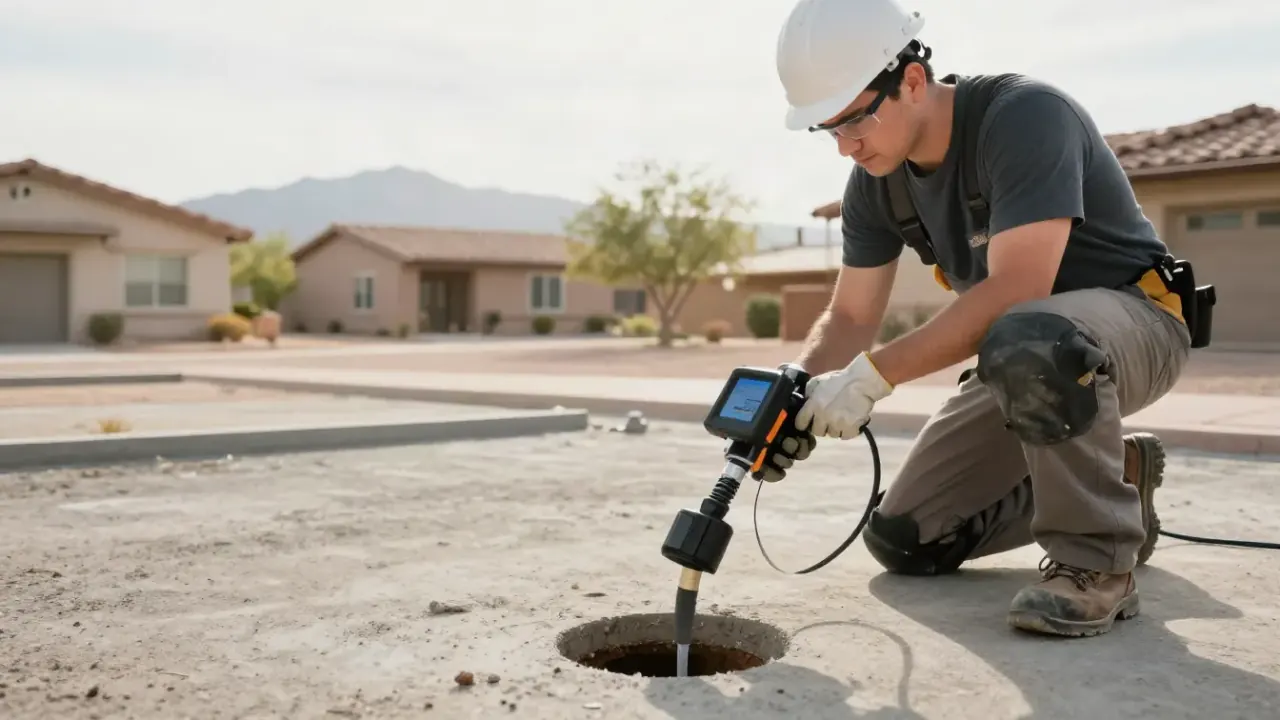
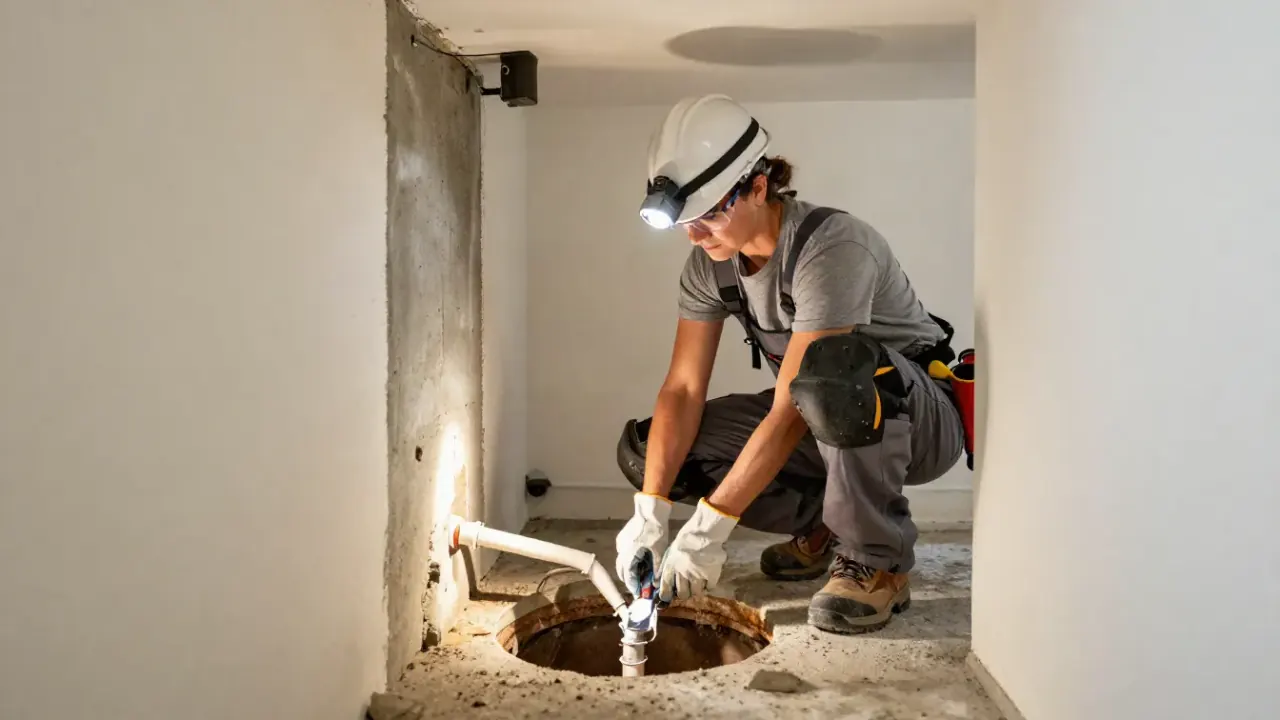
How Leak Detection Finds a Leak Without Breaking Concrete
We pinpoint slab leaks in Avondale with acoustic, electronic, and thermal tools, then confirm with pressure testing, so the concrete stays intact until we know exactly where to cut.
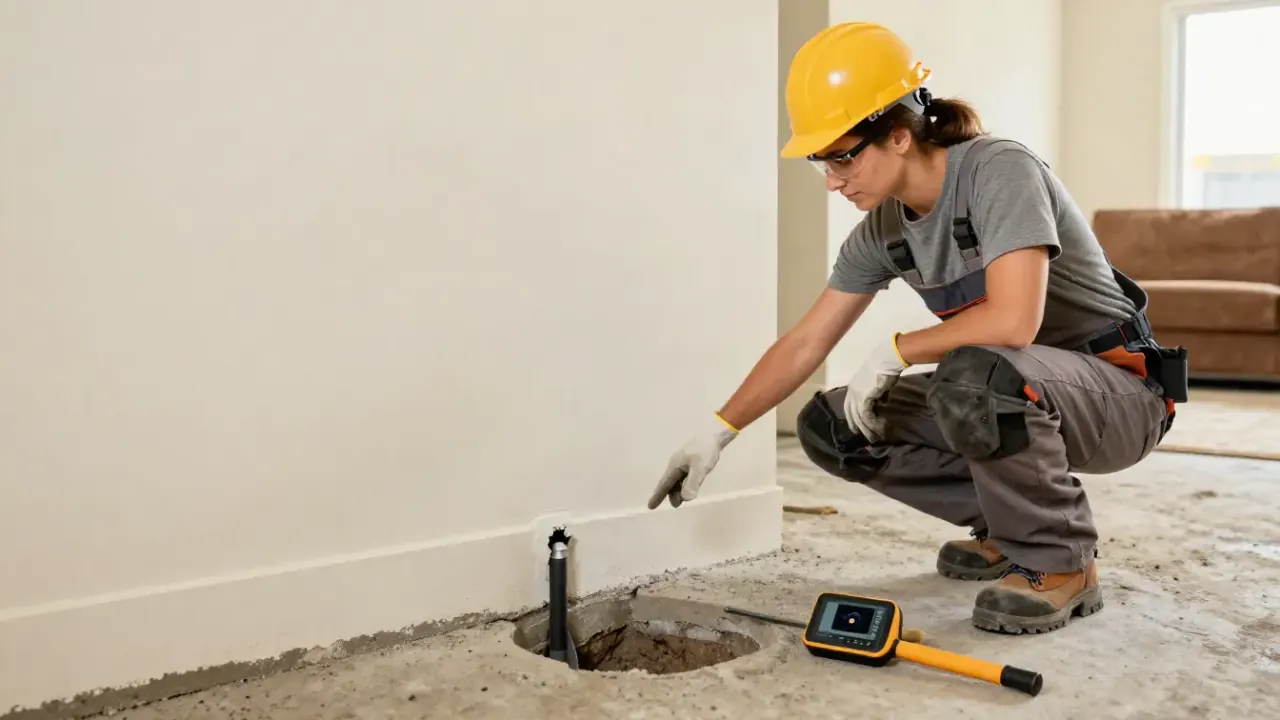
Leak detection finds a leak without breaking concrete by listening to the pipe, pressurizing the line, and reading heat signatures on the floor, then confirming the exact spot before any cutting starts. The concrete stays untouched until we know where the leak is. That matters in Avondale, where most homes sit on post-tension slabs and a blind hammer swing can cost thousands in cable repair.
Here is how the process actually works, what equipment we run, and why the pinpoint step is the difference between a two-hour repair and a two-week mess.
The Short Answer: Sound, Pressure, and Heat
Leak detection without breaking concrete in Avondale AZ is a diagnostic process that uses acoustic listening, line pressure testing, and thermal imaging to locate a pressurized water leak under a slab before any demolition. We run three or four methods together because no single tool is right for every slab.
A pinhole leak in a copper line sounds different from a failed joint in a CPVC line, and both sound different from a hot-water line leaking into a post-tension cable sheath. The tools overlap on purpose. When two independent methods point to the same spot, we cut.
- Acoustic listening: a ground microphone picks up the hiss or rush of water escaping under pressure.
- Pressure isolation: we shut off fixtures one at a time and watch the gauge to confirm which line is losing water.
- Thermal imaging: an infrared camera shows the warm streak a hot-water leak leaves under tile or carpet.
- Electronic amplification: a correlator compares sound at two points on the line and calculates distance to the leak.
If you have already noticed a spike on your bill, our high water bill leak investigation Avondale AZ starts with the meter and works inward from there.
How Does Leak Detection Work Without Breaking Concrete in Avondale AZ?
We start at the water meter, because the meter tells us whether the leak is on the supply side or the drain side before we touch a single tool. With every fixture off, a spinning meter means pressurized water is escaping somewhere. A still meter with a wet floor usually means a drain issue, not a slab leak.
Once we know it is a supply leak, we isolate. The cold main gets tested first, then the hot line. In Avondale homes built between 1985 and 2005, the hot line is the usual suspect because copper thins faster under constant 130°F to 140°F water. We pressurize the isolated section to 80 to 100 psi and watch for a drop over 15 to 30 minutes.
Then we listen. A slab leak in a copper line under 4 inches of concrete produces a distinct high-frequency hiss. We walk the floor in a grid, marking each loud point with tape. Two or three passes usually narrow the area to a 12- to 18-inch circle.
The last step is confirmation. We never cut on sound alone. We cross-check with thermal imaging or a second acoustic pass from a different angle, and we mark the cut zone with a pencil line. That is the spot the saw goes.
Why We Do Not Skip the Confirmation Step
Sound travels through concrete. A leak 3 feet away can sound like it is directly under your feet if the slab is thick or the soil below is saturated. Cutting in the wrong spot means a second opening, a second patch, and a repair bill that doubles. The extra 20 minutes of confirmation is the cheapest insurance in this trade.
The Equipment We Use on Avondale Slabs
Electronic leak detection Avondale Arizona work depends on four tools that most homeowners never see, and each one answers a different question. Here is what is on the truck and what each tool actually does.
- Acoustic ground microphone. A contact microphone placed on the floor surface. It amplifies the sound of escaping water and filters out traffic, HVAC, and footstep noise. We use it to map the loudest point.
- Electronic leak correlator. Two sensors placed at known points on the pipe. The unit measures the time difference between the two signals and calculates the leak's distance from each sensor. Accuracy runs within 6 to 12 inches on a straight run.
- Infrared thermal camera. Reads surface temperature differences as small as 0.1°F. A hot-water leak leaves a warm trail that shows up as a bright streak on the camera. This is the fastest way to find a hot-water slab leak in a tiled hallway.
- Pressure test rig. A calibrated gauge and isolation valves that let us pressurize one line at a time and hold it. This is how we prove the leak is real and which line it is on.
For homes where the leak is on the hot side, we also use a warm-spot check. If you can feel a warm patch on the floor with your bare foot, that is a strong signal. Our hot water line leak repair Avondale AZ team sees this most often in homes with original copper running under tile.
Can You Find a Slab Leak Without Digging in Avondale?
Yes. Non-invasive slab leak detection Avondale uses sound, pressure, and heat to locate the leak, and the only concrete we remove is the small section directly over the confirmed leak. That opening is usually 18 by 18 inches, not a trench across the room.
Here is what a typical job looks like from the homeowner's side:
- We arrive, shut off the water, and connect the pressure rig. 15 to 20 minutes.
- We isolate the hot and cold lines and confirm which one is leaking. 20 to 30 minutes.
- We walk the floor with the acoustic mic and mark the loud points. 30 to 45 minutes.
- We confirm with thermal imaging or a second acoustic pass. 15 to 20 minutes.
- We mark the cut zone and review the findings with you before any saw touches the floor.
Total diagnostic time runs 1.5 to 2.5 hours on a typical Avondale home. If the leak is under tile, we cut the tile first, then the concrete. If it is under carpet, we pull the carpet back and cut from there. The goal is one clean opening, one repair, one patch.
For leaks that turn out to be on the main line coming into the house, the approach changes. Those are outside the slab and we handle them with water service line leak repair Avondale AZ instead of slab work.
Why Avondale's Soil and Heat Make This Harder
Avondale sits on caliche-heavy soil that expands and contracts with our monsoon cycle, and that movement stresses buried copper lines year after year. The same soil that makes foundations shift also puts pressure on the pipes running under them.
Summer ground temperatures push 90°F at 2 feet deep. That heat accelerates corrosion on copper, especially on the hot-water side where the pipe is already carrying 130°F water. Homes in Garden Lakes slab leak repair territory, many of them built in the 1990s, are hitting the age where original copper is failing at the joints and elbows.
We also see a cluster of slab leaks in Rancho Santa Fe slab leak repair homes where the original builder ran copper through the slab without a sleeve. When the soil moves, the pipe has nowhere to go. It kinks, thins, and eventually pinholes.
Post-tension slabs add another layer. If your home has post-tension cables, a blind cut can sever a cable under tension. That is a structural repair, not a plumbing repair. We map cable locations before we cut, and we use post-tension slab leak repair Avondale AZ methods that keep the cables intact.
What to Watch Out For
The biggest mistake homeowners make is letting someone cut concrete before the leak is confirmed. A contractor who shows up with a saw and no listening equipment is guessing, and you pay for the guess.
Other things we see:
- Cutting on sound alone. One acoustic pass is not confirmation. You want at least two methods agreeing on the same spot.
- Ignoring the water heater. A leaking T&P valve or a failed fitting on top of the heater can mimic a slab leak. We check the heater first because it is free to rule out.
- Skipping the meter test. If the meter is not spinning with everything off, you may not have a supply leak at all. It could be a drain leak or groundwater.
- Cutting a post-tension slab without a cable map. This is the expensive one. Always ask whether your slab has post-tension cables before anyone cuts.
- Assuming the first leak is the only leak. Copper that has failed in one spot often fails again nearby. We pressure test the whole line after the repair.
If your home is on a slab and you are seeing a warm spot, hearing water running when nothing is on, or watching the meter spin, get it checked before the damage spreads to flooring or drywall.
When to Call a Professional
Call us when the meter spins with everything off, when you hear water under the floor, or when a warm spot shows up on tile or carpet. Those three signs point to a pressurized slab leak, and they do not fix themselves.
We handle the full job: locate, confirm, cut, repair, and pressure test. If the line is too far gone for a spot repair, we talk through options like pipe rerouting Avondale AZ to move the line out of the slab, or epoxy pipe lining Avondale AZ to seal the inside of the pipe without digging it up. For homes with repeated failures across multiple lines, whole-house repiping Avondale AZ is often the cheaper long-term answer.
Our team is state-licensed and we work Avondale slabs every week. We find the leak, fix it, and test the line before we leave.
Frequently Asked Questions
How does leak detection work without breaking concrete in Avondale AZ?
We pressurize the line, listen with an acoustic microphone, and confirm with thermal imaging. The concrete stays intact until two methods agree on the same spot, usually within 12 inches. Then we cut one small opening directly over the leak.
Can you find a slab leak without digging in Avondale?
Yes. Non-invasive detection locates the leak from the surface in 1.5 to 2.5 hours. The only concrete we remove is the 18-by-18-inch section over the confirmed leak. No trenching across the room.
What equipment is used for leak detection in Avondale Arizona?
Acoustic ground microphones, an electronic correlator, an infrared thermal camera, and a calibrated pressure test rig. We run at least two of these together so the location is confirmed, not guessed.
Is non-invasive leak detection accurate in Avondale?
On a straight pipe run, acoustic and correlator methods land within 6 to 12 inches of the leak. Thermal imaging is accurate within a few inches on hot-water leaks. We confirm with pressure testing before any cut.
How much does leak detection cost in Avondale in 2026?
Typical 2026 pricing for a full diagnostic runs $250 to $450 depending on slab type and how many lines need testing. That fee is separate from the repair, and we credit it toward the repair when you hire us for the fix.
Get Help with Slab Leak Repair in Avondale
If your meter is spinning or you feel a warm spot on the floor, we can pinpoint the leak without tearing up your home. Call Avondale Slab Leak Repair at (623) 269-8145 and we will schedule a diagnostic visit.