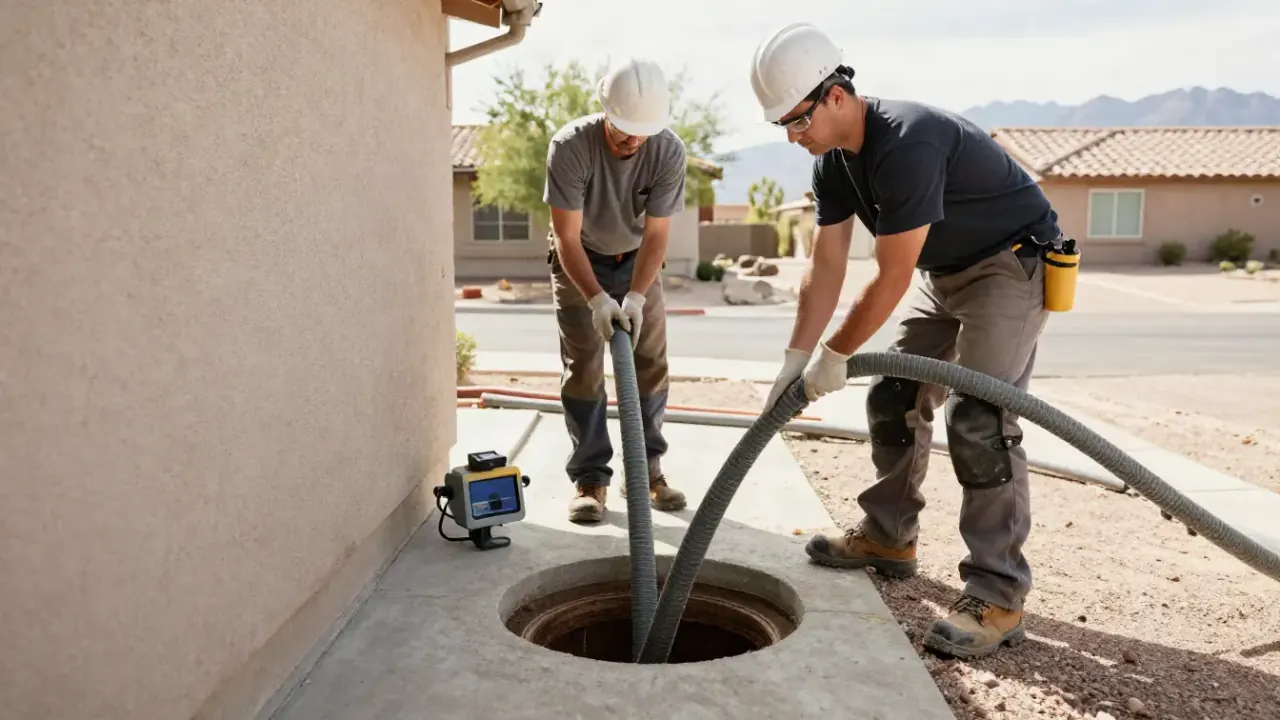
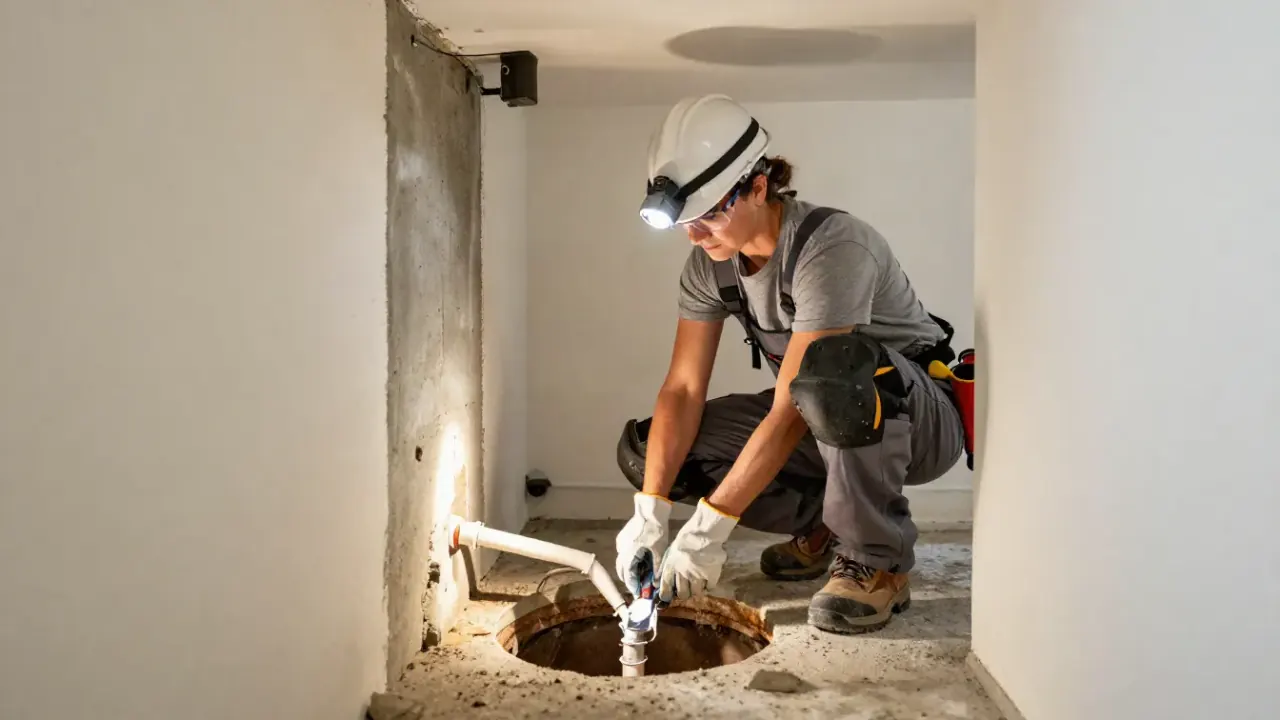
What Is a Post-Tension Slab and Why It Matters for Leaks
A post-tension slab is a concrete foundation laced with tensioned steel cables. That changes how leaks are detected and repaired in Avondale homes.
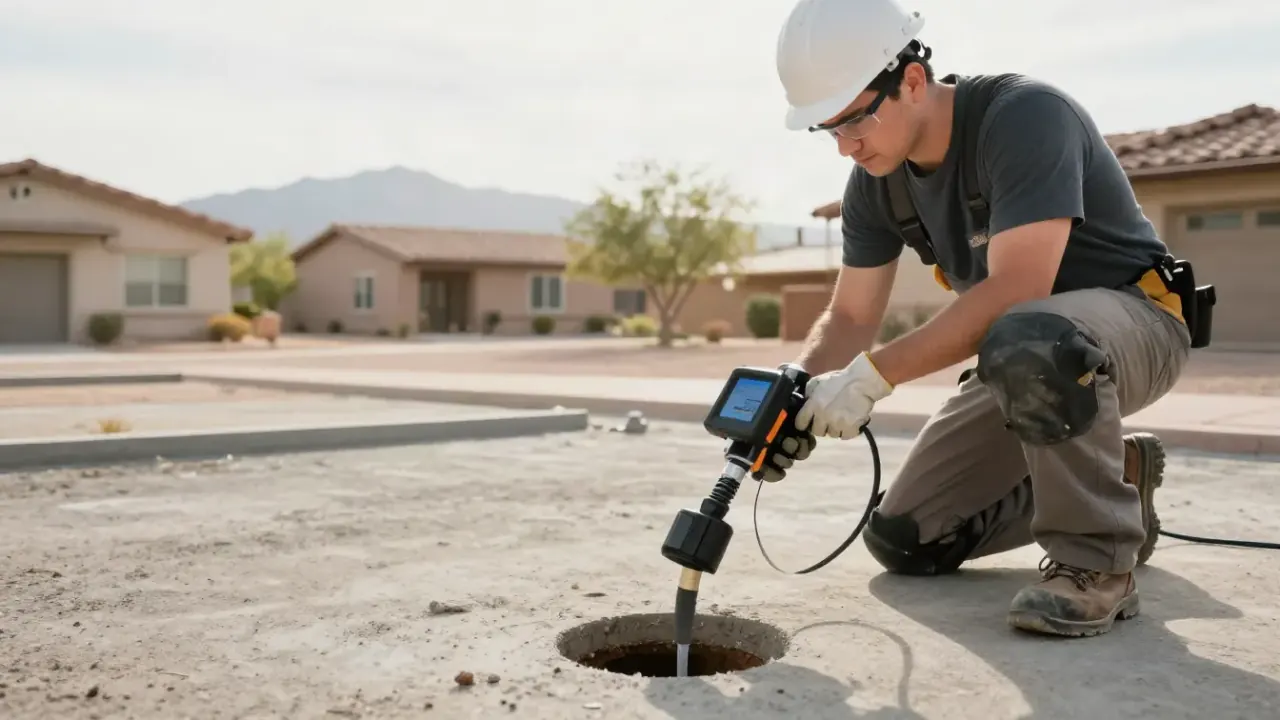
A post-tension slab is a concrete foundation that has steel cables running through it under permanent tension, which compresses the concrete and makes the slab stronger and thinner than a conventional foundation. That matters for leaks because you cannot cut into a post-tension slab the way you would a standard one - hitting a tensioned cable can cause serious damage and injury.
If you own a home in Avondale built after the mid-1990s, there is a good chance you are living on one of these foundations. Below we cover how they work, why they leak, how we find the leak without cutting a cable, and what repair actually looks like.
What a Post-Tension Slab Actually Is
A post-tension slab is a reinforced concrete foundation that uses high-strength steel cables, called tendons, stretched through the slab and anchored at each end to compress the concrete. The compression is what gives the slab its strength - the concrete is squeezed together so it resists cracking under the weight of the house and the movement of Arizona soil.
Here is what is physically inside a typical post-tension foundation in Avondale:
- Tendons: steel cables, usually 0.5 or 0.6 inch diameter, encased in a greased plastic sheath so they can slide and stretch.
- Anchors: steel wedges at the slab edge where the cable is locked off after tensioning, typically stressed to around 33,000 pounds per cable.
- Concrete: usually 4 to 5 inches thick, thinner than a conventional slab because the tension does the work.
- Post-tension mat: a grid of cables running both directions, spaced roughly 4 to 6 feet apart.
The cables are not removable. Once the slab is poured and stressed, they stay in place for the life of the home. That is the single most important fact for anyone dealing with a leak - the layout of those cables dictates where we can and cannot cut.
Why Post-Tension Slabs Matter for Leaks in Avondale
Post-tension slabs matter for leaks in Avondale because the cables limit where a plumber can open the floor, so leak detection has to be precise rather than exploratory. On a conventional slab you can jackhammer a trench almost anywhere and patch it back. On a post-tension slab, a careless cut through a tendon can release stored energy, crack the foundation, and turn a $1,500 leak repair into a $15,000 foundation problem.
Avondale sits on soil that expands and contracts hard with our monsoon and dry cycles. That movement stresses buried copper and PEX lines, and the most common failure points we see are pinhole leaks in copper, failed fittings at 90-degree turns, and abrasion where a pipe rubs against the concrete or rebar.
Homes in Garden Lakes slab leak repair territory and the older pockets of Avondale tend to have copper supply lines that are now 25 to 35 years old - right in the window where pinhole leaks start showing up. Newer builds in Coldwater Springs slab leak repair areas mostly run PEX, which fails less often but still fails at crimp fittings and manifolds.
Either way, the foundation type changes the repair method. That is why we ask about post-tension construction before we quote anything.
Post-Tension Slab vs Conventional Slab in Avondale
Post-tension slab vs conventional slab in Avondale comes down to how the concrete is reinforced and how much freedom a plumber has to open the floor. A conventional slab uses rebar or wire mesh and is typically 6 to 8 inches thick. A post-tension slab uses tensioned cables and is usually 4 to 5 inches thick.
For leak work, the practical differences are:
- Cutting: Conventional slabs can be saw-cut and jackhammered freely. Post-tension slabs require X-ray or ground-penetrating radar to map cables first.
- Repair cost: A direct-access repair on a conventional slab often runs $1,200 to $2,500 in 2026 pricing. On a post-tension slab, expect $1,800 to $3,500 because of the detection and cable-avoidance work.
- Rerouting: Running a new line overhead or through the attic is often the smarter move on post-tension, since it avoids the slab entirely.
- Future work: Once you know the cable layout, later repairs get easier - but you should keep that documentation with the house.
Most Avondale homes built from the late 1990s onward are post-tension. If you are not sure which you have, look at the edge of your garage slab. Post-tension slabs have visible rectangular anchor pockets, usually patched with a slightly different color of concrete, spaced every few feet.
How to Detect Leaks in a Post-Tension Slab in Avondale
How to detect leaks in a post-tension slab in Avondale starts with the same signs as any slab leak - a hot spot on the floor, the sound of running water when nothing is on, or a water bill that jumped without explanation. The difference is that detection has to be accurate enough to pinpoint the pipe before anyone cuts.
Here is what we actually do on a post-tension slab:
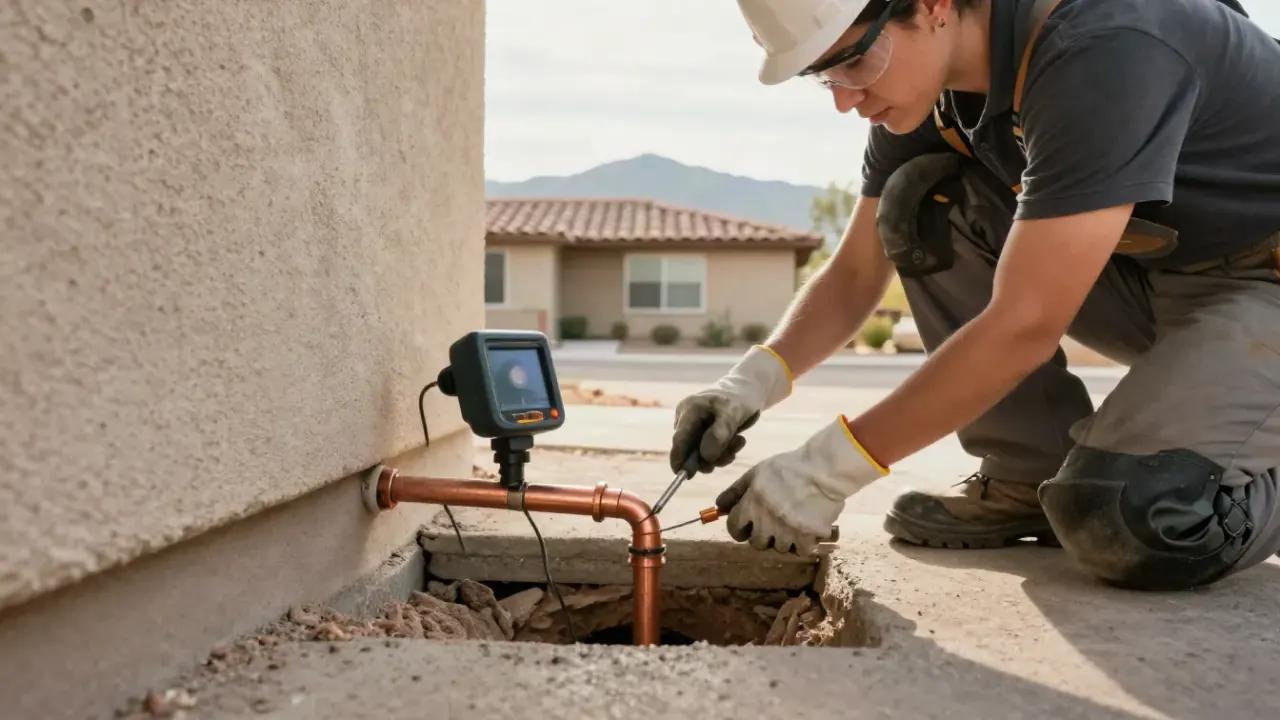
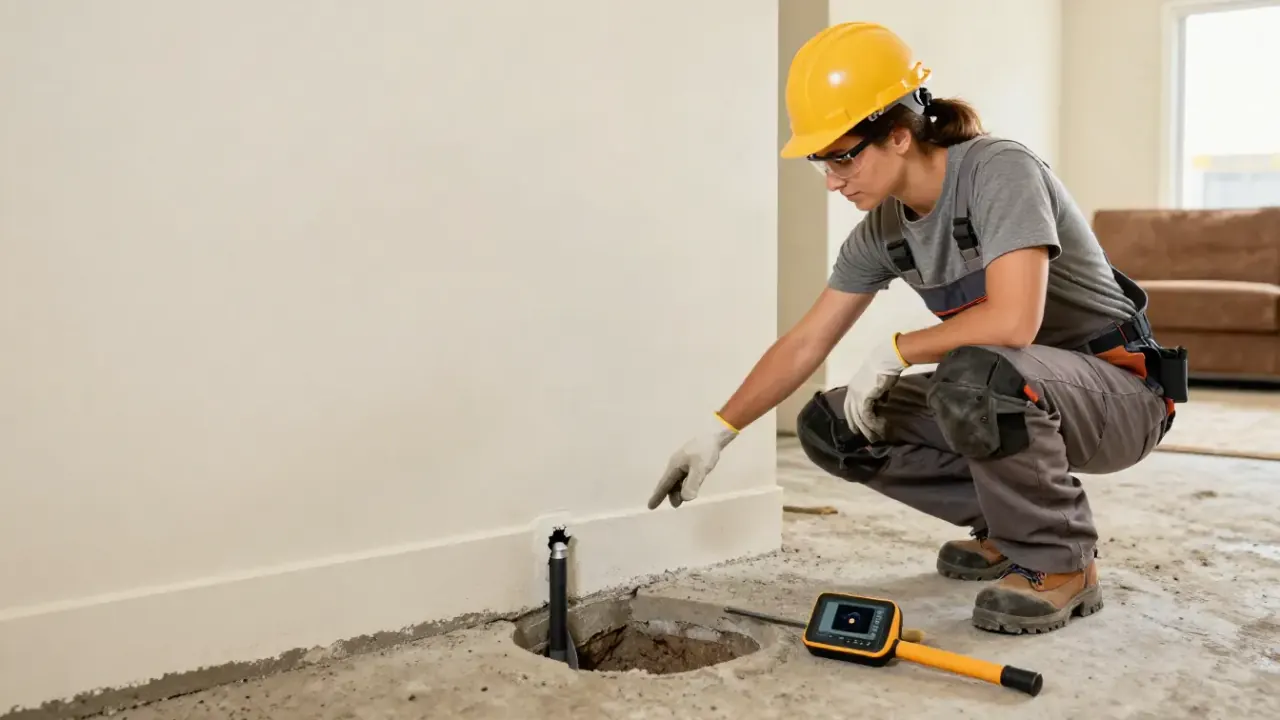
- Acoustic listening: we press a sensitive microphone to the floor and follow the sound of the leak to within a few inches.
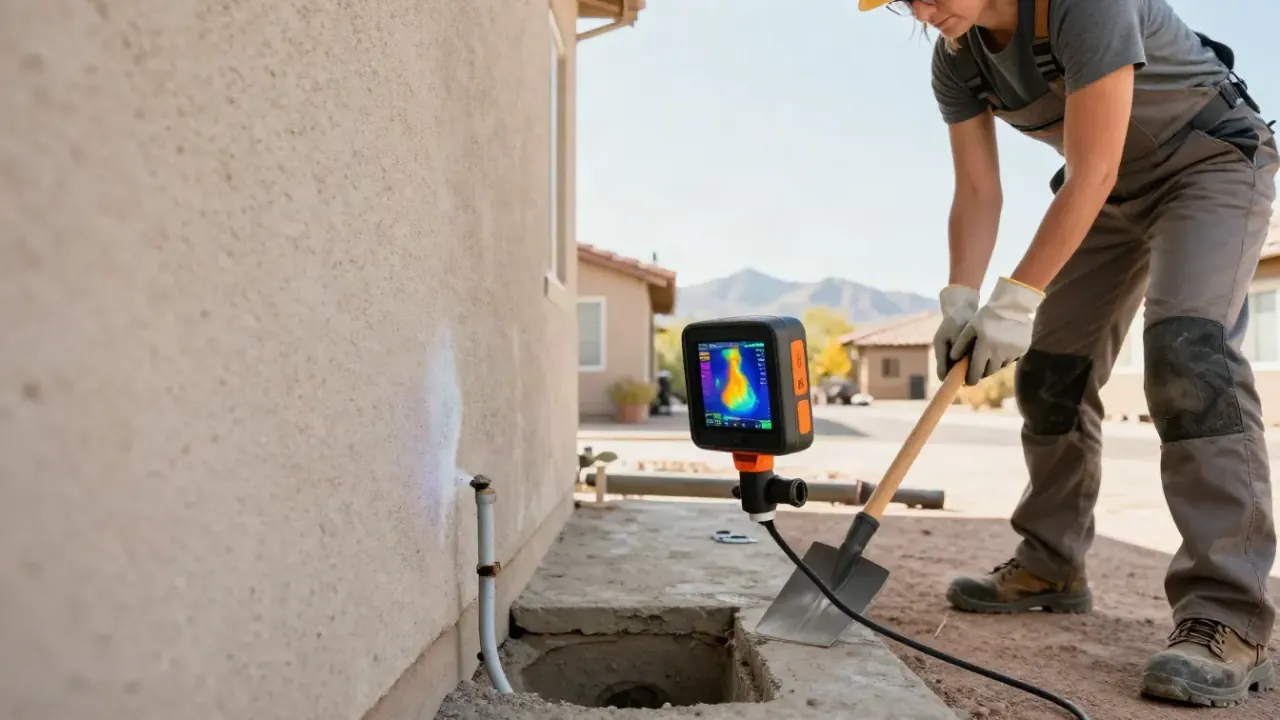
- Thermal imaging: a hot water line leak shows up as a warm streak on the slab, often 5 to 15 degrees above ambient.
- Pressure isolation: we isolate the hot and cold sides and watch the meter to confirm which line is losing water.
- Cable mapping: before any cutting, we scan the slab to mark tendon locations and keep the repair clear of them.
If your bill has climbed but you cannot find the source, a high water bill leak investigation Avondale AZ is the fastest way to narrow it down. We have seen bills go from $80 a month to $340 on a single pinhole leak that was hiding under tile.
One more thing: on post-tension slabs, warm spots are almost always a hot water line issue. If you feel a warm patch near the kitchen or a bathroom, that is a strong signal and worth calling about before it gets worse. Our team handles hot water line leak repair Avondale AZ regularly, and the earlier we catch it, the less floor we have to open.
How We Repair Leaks in Post-Tension Slabs in Avondale
How we repair leaks in post-tension slabs in Avondale depends on where the pipe sits relative to the cables and how much floor you are willing to open. We always start by confirming the cable layout, then we pick the least invasive method that solves the problem for good.
The options, roughly in order of how often we use them:
- Rerouting the line: we abandon the leaking section in the slab and run a new line overhead through the attic or along a wall. No slab cutting, no cable risk. This is our first choice on most post-tension homes.
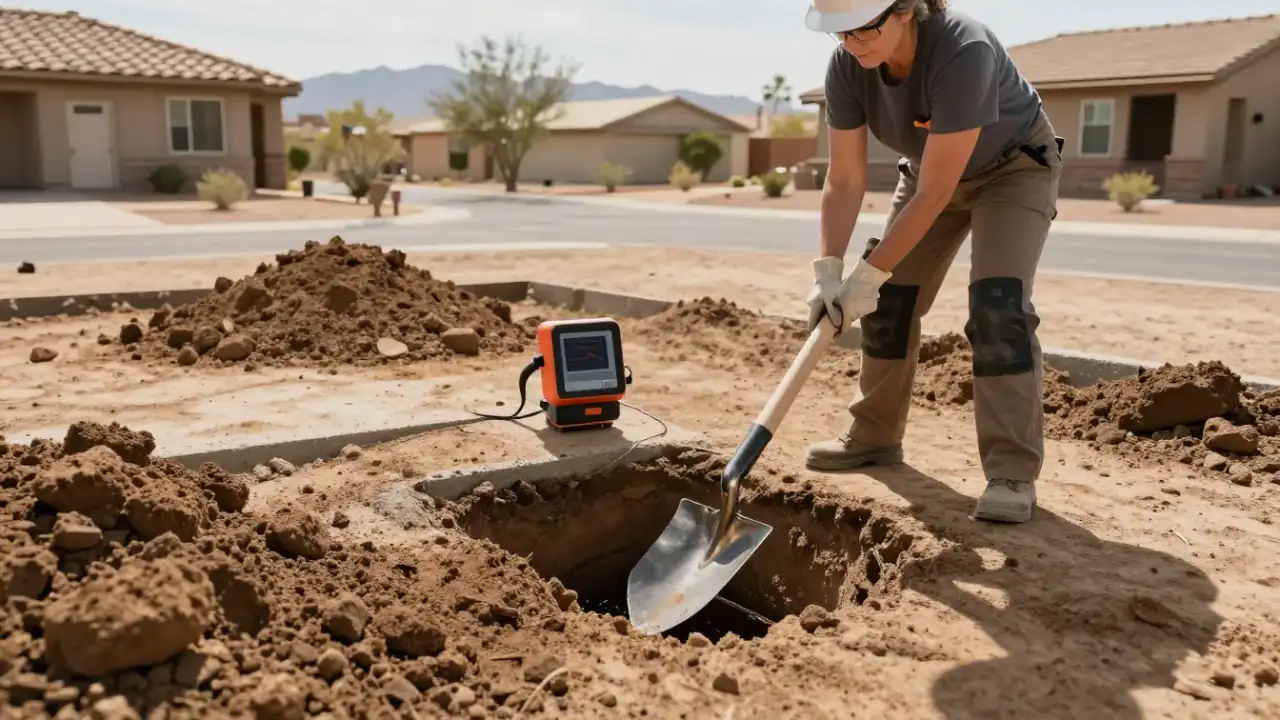
- Tunneling under the slab: we dig access from outside the foundation and repair the pipe from below. Good when the leak is near the perimeter.
- Direct access: we cut a small, mapped opening in the slab, avoiding tendons, repair the pipe, and patch the concrete. Used when rerouting is not practical.
- Epoxy pipe lining: for certain copper lines, we can line the inside of the pipe from an access point and seal the leak without digging at all.
Rerouting is usually the cleanest answer on a post-tension foundation. We do it often, and you can see how we approach it on our pipe rerouting Avondale AZ page. If the whole supply system is at the end of its life, a whole-house repiping Avondale AZ is often cheaper long-term than chasing one leak every 18 months.
We find the leak, fix it, and pressure-test the line before we leave. You get a dry floor and a written record of where the cables run, which is worth keeping for the next owner.
What to Watch Out For
The biggest mistake we see on post-tension slabs is a general handyman or an inexperienced plumber cutting into the floor without mapping the cables first. That is how a small leak becomes a structural repair.
Other things to watch:
- Assuming it is just a water heater. A warm spot in the middle of the floor is rarely the water heater. It is usually a hot water line under the slab.
- Ignoring a slow rise in the water bill. A pinhole leak can waste 30 to 60 gallons a day before you notice anything wet.
- Letting a leak run under tile or laminate. Water wicks sideways, and by the time the floor buckles you are looking at both a plumbing repair and a flooring replacement.
- Not documenting the repair. If you sell the home, the next owner and their plumber need to know where the cables are and what was fixed.
If you are in one of the neighborhoods we serve, like Rancho Santa Fe slab leak repair or the homes around Corte Sierra slab leak repair, we already know the typical foundation layout and pipe materials for your street. That saves time on the front end.
When to Call a Professional
Call a professional the moment you have a warm spot on the floor, the sound of water with everything off, or a water bill that jumped more than 20 percent month over month. Those three signs point to a slab leak, and on a post-tension foundation you do not want anyone guessing at the repair.
Avondale Slab Leak Repair handles post-tension slab leak detection and repair across Avondale and the surrounding West Valley. We map the cables, find the leak, and fix it without putting your foundation at risk. If you are not sure whether your home is post-tension, we can tell you from the anchor pockets at the slab edge in about two minutes.
Frequently Asked Questions
What is a post-tension slab in Avondale AZ?
A post-tension slab in Avondale AZ is a concrete foundation reinforced with steel cables stretched under tension. The compression makes the slab stronger and thinner than a conventional foundation. Most Avondale homes built after the mid-1990s use this construction, which is why leak repair requires cable mapping before any cutting.
Can post-tension slabs leak in Avondale?
Yes. Post-tension slabs leak in Avondale just like any other slab - the cables reinforce the concrete but do nothing for the pipes running through or under it. Copper pinhole leaks, failed fittings, and abrasion from soil movement are the most common causes we see, usually on homes 20 to 35 years old.
How do you repair leaks in post-tension slabs in Avondale Arizona?
We repair leaks in post-tension slabs in Avondale Arizona by rerouting the line overhead, tunneling from outside the foundation, or cutting a mapped opening that avoids the tendons. Rerouting is our first choice because it never touches the slab. Direct access is used only when rerouting is not practical.
Are post-tension slab leaks covered by insurance in Avondale?
Most Avondale homeowner policies cover the resulting damage - water-damaged flooring, drywall, cabinets - but not the pipe repair itself. Coverage depends on your policy and whether the leak was sudden or long-term. We document the leak location and cause so you have what your adjuster needs to process the claim.
How much does post-tension slab leak repair cost in Avondale?
Typical 2026 pricing in Avondale runs $1,800 to $3,500 for a direct-access repair on a post-tension slab, and $2,500 to $6,000 for a reroute depending on distance and access. Detection alone is usually $250 to $450 and is credited toward the repair when you hire us.
Get Help with Slab Leak Repair in Avondale
If you have a warm spot, a climbing water bill, or the sound of running water under your floor, we can find it and fix it without risking your post-tension cables. Call Avondale Slab Leak Repair at (623) 269-8145 and we will get a technician out to pinpoint the leak and walk you through the repair options.